The Fortunate Sun of Dashi Namdakov
Dashi is only the first part of the name of the world-renowned Russian sculptor. In the Buryat language, it means “good fortune.” The second part—Nima—means “sun.” This name was chosen at his birth by a far-sighted lama. Perhaps it is in this special blessing that the secret of his extraordinary creative gift lies.
From a Pure Source
The works of Dashi Namdakov are equally valued in both the East and the West, earning him the nickname “the two-faced Janus of sculpture” among art historians. With the calm characteristic of a Buddhist, Dashi does not dispute this. However, he emphasizes that he simply follows the hints of fate and moves in the direction they point. When asked about the distinctive features of his artistic style, he replies: he was born with it. For the Buryats, ancestral roots stretching back centuries form the basis of their worldview and the foundation of everyday life. Creative talent runs in the family—Balzhan Namdakov was a true master of many crafts: he forged metal, wove carpets, carved wood and bone, and created jewelry and Buddhist religious images. All eight of his children inherited different facets of his talent, but perhaps fate was most favorable to Dashi.
The mystery of Namdakov’s talent continues to captivate specialists, connoisseurs, and a wide audience alike—anyone who has entered the orbit of his creative force. The sculptor never ceases to surprise, constantly exploring new directions and themes—something only a person capable of stepping beyond rules and conventions can achieve. Perhaps the explanation is simple: he creates as he feels, not as it is “supposed” to be done. And he has done so since childhood. Dashi himself, a native of the small Buryat village of Ukurik, often says that his artistic vision was largely shaped by his childhood impressions of his homeland. His schoolteacher could hardly have imagined that this student would one day become a world-class sculptor whose works would be displayed not only in the Hermitage and the Tretyakov Gallery, but also in leading collections around the world—from the Guangzhou Museum of Art to the Tibet House in New York, as well as in private collections worldwide.
A “Captain” of Long Voyages
To whom much is given, much is expected. Fate rarely lays out a path of roses and lilies for true talent. As a teenager, Dashi experienced firsthand what it means to struggle with a serious illness. He overcame difficult trials, after which fate confronted him with an important life choice—he was predicted to become a shaman. Nature had endowed him with this rare gift; it only needed to be developed. However, the power of art over the soul of the future sculptor proved stronger. And the spirits, though not immediately, accepted his decision: an artist can heal human souls just as a shaman heals bodies.
The search for one’s creative path is rarely easy. As a young man, he enrolled in the Faculty of Architecture at the Novosibirsk Institute of Engineering and Construction, but soon realized that his true calling was sculpture. This realization led him to the Krasnoyarsk Art Institute. There, a portal opened before the young neophyte into previously unknown worlds: the inexhaustible heritage of Russian and European culture, as well as the ancient civilizations of the East. His passion for mastering the secrets of the profession was so great that Namdakov completed his diploma ahead of schedule, encouraged by Lev Nikolaevich Golovnitsky, who supported him throughout his studies. Seeing that Dashi was ready not only to learn but to create, Golovnitsky helped him graduate externally. And so he set off on a free voyage across the vast expanse of creativity.
He once believed that the deep language of his art would be understood only by those who shared his cultural roots. He was greatly surprised to discover that his mythological language resonated with people from entirely different cultures and ethnic backgrounds. Bronze became his preferred material, yet the level of casting available in Russian workshops at the time did not match his inner striving for absolute perfection. Together with his family and team, Dashi moved to Italy, settling in the town of Pietrasanta, renowned for its unparalleled foundry traditions. Five luminous years passed there, filled with creative exploration and production.
Five years later, fate once again changed Namdakov’s course, bringing him to the capital of the United Kingdom. This period marked a time of broad international recognition, encounters with demanding art connoisseurs, and intense creative work. New ideas emerged in the master’s mind, each more unexpected than the last. However, the Western art world, despite its outward openness and diversity, operates according to strict internal laws that often subordinate artistic impulses to pragmatic rhythms. But the soul of a true artist cannot be confined within rigid boundaries. One bright sunny morning, a clear realization came: everything that could be achieved along this path had already been accomplished. After five years in England, Dashi made another difficult yet ultimately right decision—to return to Russia. For one can be truly free and whole only in one’s homeland, where roots nourish the wings. And Namdakov returned to his native land—quite literally.
Love for One’s Native Land
Dashi is deeply attached to the land of his ancestors. When his family home burned down, he rebuilt it on the same spot at his mother’s insistence, even though Buryat traditions advise against doing so. While living abroad, he returned to his homeland at least a couple of times each year—to absorb the powerful energy of the steppes, Lake Baikal, the Sayan Mountains, and Siberian forests. But one day, arriving in Ukurik for New Year, he found only silence. Houses stood empty, their windows clouded with the dust of oblivion, as if patiently awaiting the long-promised return of their owners that never came. The village had to be saved.
At first glance, this task seemed nearly impossible. The lack of roads, electricity, and stable communication with the outside world created a sense of a closed circle. Many in his position would have sought solutions through high-level connections. But Dashi chose a different path: he decided not to rely on external forces and not to wait. The decision was made—to create, two kilometers from Ukurik, a place of attraction, and to name it simply and beautifully: “Tuji,” which in Buryat means “pine forest.” Not only fellow villagers responded to the call, but also residents of nearby settlements. They took up shovels, axes, and saws, and the work began. Every day, nearly two hundred people united by a shared purpose contributed their efforts. The future park gradually acquired its unique character, shaped not only by Namdakov’s works but also by sculptures of other artists united by a common idea. In the future, he intends to involve even more creators whose works reflect and reinterpret the cultural codes of different peoples.
Life is returning to the village. Tourists are increasingly coming here to experience the unique blend of ancient nomadic culture and contemporary art. Meanwhile, Dashi is already extending the Tuji experience to a new, truly grand масштаб. In a special economic zone of the Republic of Buryatia, across nearly 300 hectares, he is creating a unique art space where art will become the heart and main purpose of leisure.
Between Heaven and Earth
True talent is not only a measure of giftedness, but also of creative courage—the ability to take steps that expand and even transform established perceptions, both for the public and the professional community. For Dashi Namdakov, such a step beyond expectations was his participation in the artistic design of the Patriarchal Cathedral of the Resurrection of Christ—the Main Cathedral of the Russian Armed Forces. This monumental project, conceived as a synthesis of tradition and innovation, remains a subject of deep reflection and discussion. The decision to invite an artist whose worldview and aesthetics were shaped by Buddhist tradition to work on its key imagery was an exceptionally bold and symbolic gesture, opening space for dialogue between cultures and spiritual traditions. If one sets aside conventional interpretations, the internal logic of this unique artistic vision becomes clear—and the invited sculptor’s role fits into it organically.
The theme of military service embodied in the cathedral is, above all, a theme of immense labor and the utmost exertion of human strength. It is an understanding of the true cost of heroism, which cannot be reduced to the spectacle of parades. Art capable of expressing this must be equally honest and uncompromising. Namdakov, whose worldview was shaped by the harsh nature of Siberia and its immutable laws, succeeded in capturing this authentic essence. One of the most striking works is the sculpture “To the Mothers of Victors,” embodying the universal grief of women whose children gave their lives for peace.
The cathedral’s entrance is framed by monumental wrought-iron gates depicting Russia’s first saints, Princes Boris and Gleb. Above them are images of the Mother of God with the Child and a symbolic representation of the Holy Trinity, marking the transition from the earthly to the spiritual. Inside, under the vaults, another dimension unfolds: in the apse, against a deep lapis-lazuli background, a golden figure of the Risen Christ hovers. One hand is raised in blessing, while the other holds a scroll with revelations of the future. This image sets the tone for the entire interior, uniting heavenly glory with human reverence.
Dashi speaks with sincere gratitude about fate allowing him to participate in the creation of this unique spiritual and artistic space. This work became a deeply conscious step for him—both creatively and personally. It opened to him the world of Orthodox tradition and revealed a sense of kinship between Buddhism and Christianity, both rooted in the idea of the immortal human soul fulfilling its higher purpose on Earth.
The Art of Surprise
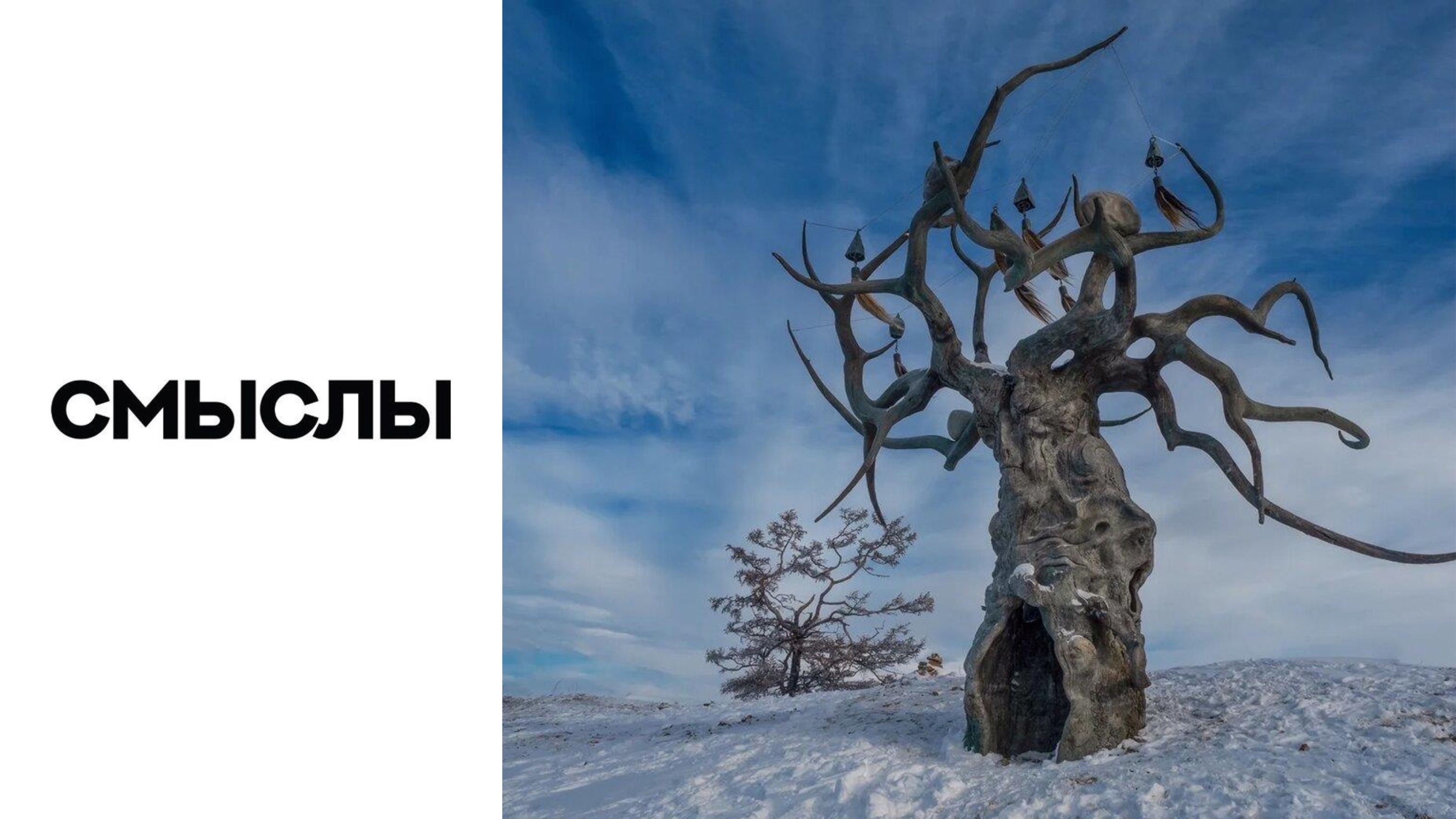
Namdakov’s monumental works can be found across the country: “Father Baikal” on Olkhon Island, “The Tsar’s Hunt” in Kyzyl, “Bars and Zilants” in Kazan, “Golden Shoria” in Tashtagol, and “Transformation” in Krasnoyarsk. Each of them does more than exist within a space—it actively shapes it. This is especially evident in urban landscapes. Each time, the master seeks not only to embody an artistic image but also to send a visual and energetic message into everyday life.
For Dashi, it is essential how a person who passes by his sculpture every day—on the way to work in the morning and home in the evening—will engage with it. Museum and gallery works are one thing; public space is another. Here, people who may be far from art must integrate it into their daily lives, willingly or not. The Soviet-era tradition of integrating art into urban environments had long been forgotten, and modern attempts often met with confusion or rejection.
A striking example is his participation in the design of the Potapovo metro station on the Sokolnicheskaya line. In recent years, the Moscow Metro has experienced a renaissance, with new stations combining functionality and refined aesthetics reminiscent of the “underground palaces” of the past. Potapovo, designed by the PARSEC bureau led by Dashi and Chingis Namdakov and Ildar Giniyatov, features a bold “cosmic” style. The station resembles a rocket launching into the depths of the galaxy, symbolizing the dynamic development of Moscow’s new territories. Its sculptural column serves both artistic and practical purposes, concealing technical equipment while acting as the visual centerpiece.
“An artist must change. If you remain the same, you may become recognizable, but you lose yourself. An artist is a seeker. He must surprise himself and the world.” This credo guides Namdakov throughout his life. Exploring new creative fields—jewelry, the family art doll project “Ulger,” and more—is a natural way of being for him. His move into architecture was therefore inevitable—after all, architecture and sculpture are, in essence, sisters.
A true artist creates a powerful energy field around themselves. Dashi Namdakov creates for people—not only for contemporaries, but for future generations. His works accumulate the strength of the artist, his vision, and the material itself. He connects different streams of time into a unified whole. Entering this field, one can recharge with new impressions, emotions, and meanings—and begin to see the world as far more complex and beautiful than ever imagined.
Other publications

The sculpture “Gold Nugget” has been installed at Transbaikal State University
The monumental bronze sculpture “Gold Nugget” by Dashi Namdakov has been installed at Transbaikal State University.

Dashi Namdakov’s exhibition has opened at Noôdome
THE ART NEWSPAPER RUSSIA